“Automatic, Fully Automatic”: A Cosmology in the Washing Machine
Lin Yunke
An essay by Lin Yunke (林云柯), first published in Chinese by The Paper (澎湃新闻) on 2 February 2022: “自动的,全自动的”:洗衣机中的宇宙论. The photos come from the original publication.
I. “Automatic, Fully Automatic”
She captivated my eyes; she changed my time
She is automatic……
— New Pants (新裤子), “She Is Automatic”
Four years ago, in August, I spent a little while in an apartment in an old residential compound in Shanghai. The bathroom was only about two square metres. With a washbasin, a toilet right beside it, and a shower where there was barely room to turn around, there was no space left for anything else, let alone an automatic washing machine. In summer, clothes need changing often, and after two days of hand-washing I had had enough. I thought I would try searching for a “semi-automatic washing machine,” a rather timeworn term, after ruling out “fully automatic” machines that were too large. To my surprise, on the latest smartphone the phrase seemed to open a door into the end of the last century. The Weilì washing machines whose advertisements had rung out during prime-time television breaks in my childhood still existed; they were still making the “outdated” models that suited my needs.
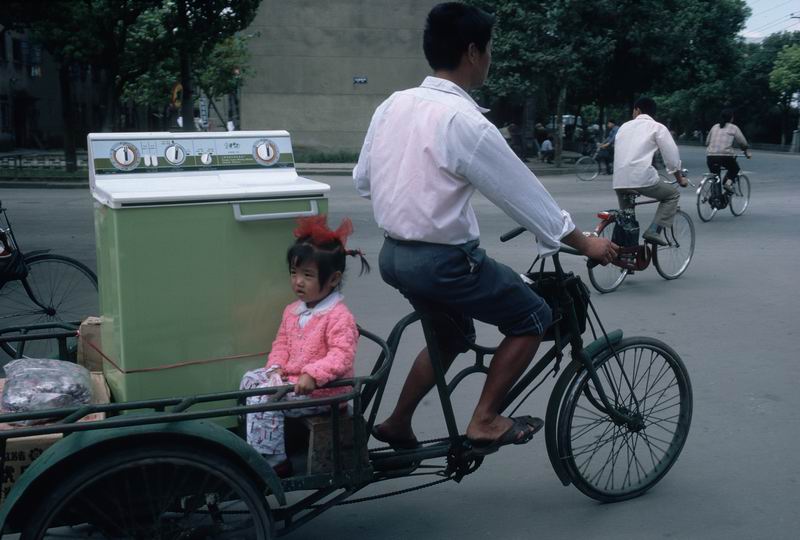 Suzhou, 1987: a father carrying a washing machine and his daughter on a tricycle.
The machine that arrived was about the size of a bucket. A mechanical dial set it spinning for a timed cycle. Then I had to lower the drain hose by hand to empty the dirty water, fit the spin-drying basket by hand, and turn the dial again to spin the clothes dry… It brought back the old machine we had at home when I was a child: a wash tub on the left, a spin-dryer on the right, and after washing you had to move the clothes from one side to the other. The machine shook so violently during the spin cycle that my mother would press down on it to quiet it. The image made a profound impression on me as a small child. It was like a fierce little beast trying to throw off the yoke of instrumental reason, while a human being held it down like a cowboy on a bull. The curious thing is that the force behind the washing machine’s development was precisely humanity’s immense desire to escape drudgery. In opinion polls, it has consistently ranked above every high-tech invention among humanity’s most important inventions. Its developmental goal was therefore clear: full automation.
According to Helmut Schneider, a German historian of antiquity, in his History of Ancient Greek and Roman Technology, the word “automatic” (automatos) appears as early as Book XVIII of the Iliad. There Hephaestus makes wheeled tripods that go by themselves to attend the assembly of the gods. The earliest automatic device recorded in ancient literature is a standing statue of Dionysus’s nurse. It took part in Ptolemy II’s procession at Alexandria, and could rise by itself, pour milk, and sit back down. In Homer, “technology” (techne) originally meant deceiving the strong; among the Olympian gods, those skilled in making things also tended to have poor reputations, Dionysus and Hephaestus among them. As labour developed, this wisdom of the weak gradually acquired legitimacy. It was neutralised and transformed into “crafts” (technai), while the gods, once the targets ensnared and deceived by “technology,” became teachers who passed on the crafts—a ceaseless transmission and inheritance of knowledge.
In Works and Days, Hesiod teaches people skilled in labour to use their tools on the days indicated by the seven daughters of Atlas. This is a “semi-automatic” craft: the days follow their own regular cycle, but still require observation and intervention. The word “automatic,” however, became a hidden anomaly in this transformation. It means that the mode of a device’s operation has been settled in advance and stored within the device itself. As it developed toward its “fully fledged” state, this anomaly was intensified, breaking the natural relationship between “works and days.” In the age of exploitation, when “capital never sleeps,” “observation and intervention” have also been severed from the craft of labour and turned into “control and surveillance.” The worker’s suffering does not come from being denied “craft”; it comes precisely from the automated device’s taking away the whole way of life embodied in that craft. In Modern Times, Chaplin wryly portrays this suffering through a “fully automatic feeding machine.” Tied to it and “enjoying” its fully automatic “service,” the worker confronts the anomaly at its extreme: it cannot be interrupted; the only option is to start over.
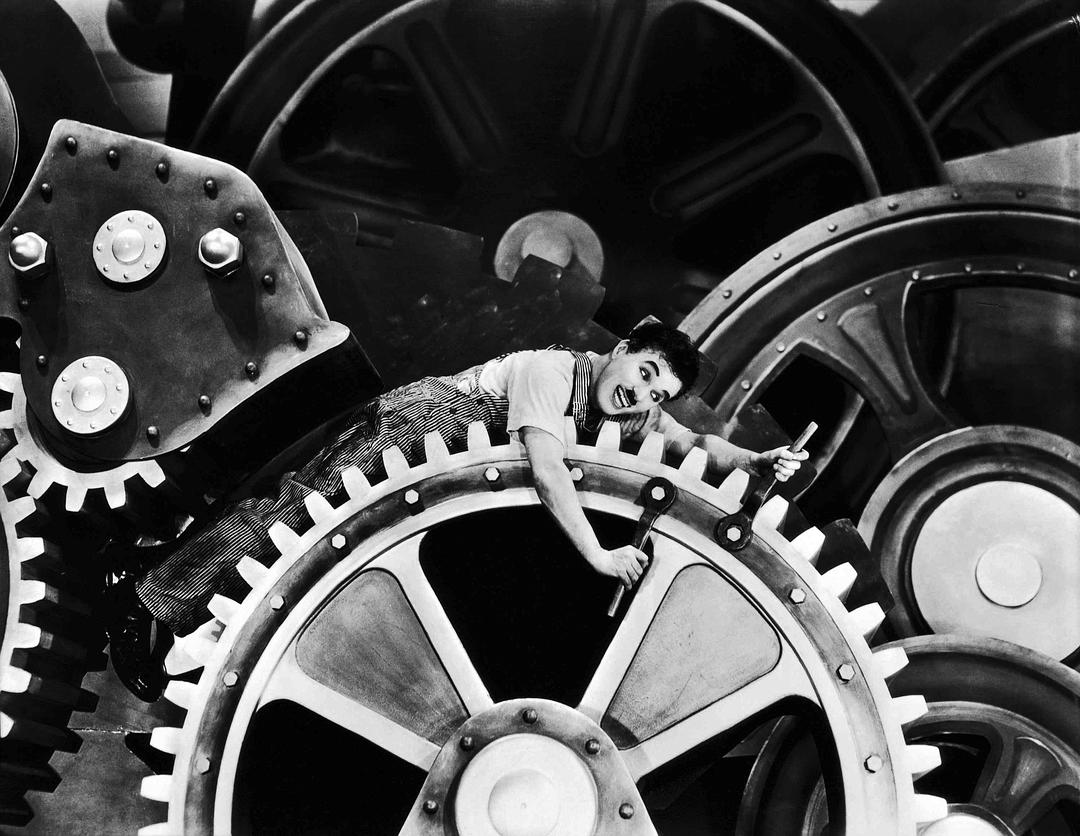 A still from Modern Times.
“Automatic” unfolds like a temporal enclosure: press the start button and you are confined within it. “The laundry isn’t finished yet” may be one of the most common reasons for a last-minute date to fall through in contemporary society. Likewise, forgetting to take the spun-dry clothes out of the tub, having to wash them again, and still risking a repeat of the same mistake is one of the most common tragedies of domestic life today. To counter the barrier of the “automatic magic enclosure,” people can only try to synchronise external time with it—for instance, by deliberately and productively immersing themselves in the “space-time enclosure” of another household task. “Automation” is a major source of the idea of “time management.” Its essence lies not in deciding when to work and when to rest, but in fitting as much time as possible into the “automatic world,” where the intervals between tasks are eliminated as far as possible.
In histories of technology, accounts of “automatic” technologies naturally lead toward “timekeeping technologies,” and eventually converge on “precision instruments”—that is, clocks. Schneider’s book is one example. Chronologically, the transition may seem to come from nowhere, but in the terms of the French scholar Simondon, it follows a certain “technical tendency.” It is worth noting that the first substance used for automatic timekeeping was water: ancient Egyptian “water clocks” achieved their “automatic” operation through the flow and buoyancy of water. In this first “automatic device,” water displayed two opposing capacities: it both falls and rises. This was the central “principle of automation” of that technological age, the technical model of the “principle of the lever.” If a lever is still a procedure for transmitting force, then water, as a single substance, contains all the information of the procedure. Perhaps water was not so much used in “automatic devices” as it was itself the material prototype of the “fully automatic.” The washing machine does not so much use water as read its informational program; rotation is that program at work. This operation illustrates the distinction between “information” and “message” in the writings of Norbert Wiener, one of cybernetics’ foremost theorists. A “message” is an organised form with “entropy,” connected to the “cluster of states” in the external world—just as the gods’ regular yet timely appearances prescribed the rhythms of work. “Information,” by contrast, is “negentropy”: the repeated, unceasing distillation within a “message.” Household appliances can all be understood as devices of “negentropy,” but the washing machine especially so: it draws clothes polluted by the rhythms of everyday life into this harmonising process of purification.
In 1858, the American Hamilton Smith invented the first washing machine. It was hand-cranked, and in 1874 it was improved by William “Bill” Blackstone. Though it met the need for a substitute tool, the washing machine’s inherent technical tendency made freeing the hands an obvious direction of development. In 1910 the first electric washing machine was made in Chicago. This marked the beginning of the automation of domestic labour; industrial automation did not truly get under way until the 1940s. It is no exaggeration to call the washing machine a founding object of modern industry. The conception of order in an automated society is, in effect, a secret of the world that the washing machine read out of water. Had Heraclitus known that the Earth and atmosphere form a “fully automatic” water cycle, he would not have said that “one cannot step into the same river twice.” At a level with something of a Zen cast, for people within the “fully automatic” water cycle, water is everywhere. “Stepping into” it, as a form of “intervention,” is impossible, because people are already organised within it.
As the washing machine runs, clothes once shaped by my body are drawn into pure “negentropy” by the “automatic.” Clean clothes embody order. Again and again, the “automatic” organises and purifies them; then they are taken out and exposed to the “increase of entropy” in everyday life—to mud suddenly splashed up by passing wheels, to dust raised by a gust of wind. No garment can enter the same washing machine twice, because it is always cast into two utterly different universes, repeatedly stripped of its identity until it becomes rubbish. This is the “washing-machine nature” of human existence in modern society. Perhaps this is why almost all automatic devices tend toward sealed forms that ward off outside observation, like my mother firmly holding down the lid of the spin-dryer. At least in those days, I had never seen what happened inside a washing machine, and did not want to see it. Yet that could not prevent the order of space and time and a particular cosmology from spilling out of it. As Nietzsche writes in Human, All Too Human: “A happy age is utterly impossible because people only wish for it, but do not wish to possess it.” We might say the same of the washing machine’s technical tendency: “automatic, fully automatic.” To wish for it but not to want to possess it: this is the true condition of people today.
II. The “Leibniz” Fully Automatic Washing Machine
She blocked out all the light; she needs me to kneel before her
She is automatic……
— New Pants, “She Is Automatic”
In fact, the history of the washing machine is a winding road that runs counter to the linear progress of technology. Only ten years after the first electric washing machine, the first drum machine appeared in the 1930s, made by an aviation company. It was the first fully automatic washing machine in the true modern sense: washing, rinsing, and spin-drying all took place in one drum. Yet washing machines did not then set off on a headlong rush toward “full automation.” The semi-automatic machine mentioned at the beginning did not appear in Japan until the 1960s, based on pulsator technology. There are two ways to understand the “semi-automation” of the pulsator machine, and both have to do with “intervention.” The twin-tub semi-automatic machine my mother had to “tame” is a “semi-automatic” machine in the classic sense: a regression from “full automation,” because human “intervention” is required to complete its programme. Today’s pulsator washing machines have become “fully automated,” but their technical form remains open to “intervention.” This gives the “semi-automatic” tendency a comparative advantage. Even now, after the water-filling cycle of a fully automatic pulsator machine ends, my father pauses it so the clothes can soak for a while and get as clean as he thinks they should. I, meanwhile, often lift the lid of a machine already in motion to toss in something I have just noticed needs washing. This “intervention” can even be refined with precision: if you know your top-loading pulsator machine well, you can learn exactly how far to lift the lid without interrupting its automatic cycle.
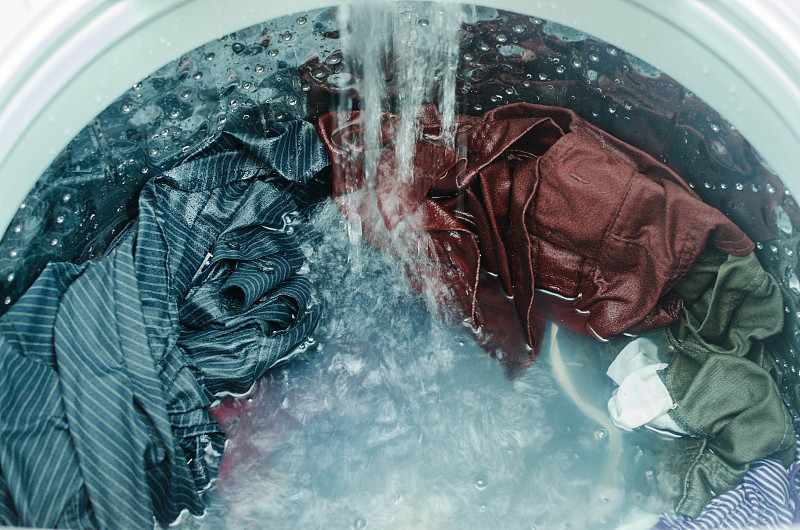
Although “fully automatic” remains a perennial selling point in commercial technology, “semi-automatic” is still the primary state of human existence in the domestic universe. Semi-automatic devices that can be stopped at any moment—especially the dials on microwaves and gas stoves—include a stop function in their automation. That, in fact, is the latent aim of Wiener’s cybernetics: correction and calibration. As the technical form of these “semi-automatic” devices suggests, they tend to conceal their “automatic” side while leaving the start button, which is also the stop button, in plain view.
Let me shift from my “semi-automatic” experience to the early spring of that same year, four years ago. My father had always used the “semi-automatic stop-and-soak method.” Carried along by the consumer enthusiasm that followed the purchase of a new apartment, he bought one of the more expensive fully automatic drum machines then on the market, complete with an automatic drying function. After that, the domestic scene most often repeated in the apartment was my mother and me crouching in front of the machine, watching clothes tumble inside and having no idea what stage the programme had reached. “When will it finish?” “I don’t know!” “But it’s been spinning for nearly two hours, hasn’t it?” “I only wanted to put in two pairs of underpants, but I can’t open the door.” If a washing machine in “semi-automatic” form still tries to enclose its “automatic barrier,” the transparent door of a fully automatic drum machine is almost an embodiment of what Žižek calls the “obscenity of the Thing.” It confronts you with the overflow of the “fully automatic cosmology”: your hands have indeed been freed by the “fully automatic,” because it leaves you helpless.
Understanding the “fully automatic cosmology” requires going back to two great thinkers, Leibniz and Newton. Their positions in the history of ideas would suggest otherwise: Newton is often seen as the pioneer who opened the door to modern science, but it is Leibniz whose thought implicitly supports the “fully automatic.” Wiener himself described cybernetics as dealing with “a thoroughly Leibnizian problem,” yet his view was far removed from Leibniz’s. Leibniz was really concerned only with the one-way transmission of a “message” that has an end. Think of the dancing figure in a wound-up music box: if we do not want to damage it, we had better not interfere with the mechanism before it stops by itself. In this process, the “message” is something sent out at the beginning; there is no question of organising and distilling “information,” as there is in my father’s “stop-and-soak method.” This is like the fully automatic drum machine, whose activity is pre-established harmony. The flow of information in water resembles the way light was understood in that period: an initial source forms a surface of light around itself, then secondary sources form, and light is propagated automatically in this way. All the sensations of washing—soaking, rinsing, shaking out, and spinning dry, the sensations through which people once experienced the actual process of getting clothes clean by exchanging them with the washing programme—disappear into full automation. Leibniz therefore held that the “monads” composing the entire world “have no windows.” They have no door that “intervention” can open; outside it stand my mother and I, waiting for Godot.
Just as “automation” and “semi-automation” appeared in the wrong order in the history of washing machines, a revolutionary shift in modern physics also grew out of a dispute over an “automatic” versus a “semi-automatic” universe. The dispute began in 1715. In a letter to the Princess of Wales (Caroline), Leibniz criticised Newton’s view that space was God’s sensorium. This would mean that God had to perceive space from outside, making the universe like a clock that God would have to intervene in, set in motion, and recalibrate from time to time—a notion plainly at odds with divine omnipotence. Newton’s loyal student Clarke entered into a debate with Leibniz. At its heart lay the subtle difference between two terms: “sense” and “sensorium.” Clarke believed Leibniz had deliberately misrepresented Newton’s meaning of “sensorium.” God did not “intervene” in the universe from outside through “senses,” since that would imply an imperfect craftsman. The Newtonian school in fact regarded God as directly present within the universe: God created the universe and sustains himself as its soul. The fundamental difference between Leibniz’s cosmology and the Newtonian one is therefore this: for the former, God’s omnipotence consists in having arranged everything in advance, including the automatic correction of errors; for the latter, it consists in having implanted himself in the universe he created and sustaining its operation.
Following the naming logic of the German father and daughter Michael Schmidt-Salomon and Lea Salomon, whose book of dialogues is titled Leibniz war kein Butterkeks (“Leibniz Was No Butter Biscuit”), we might imagine a fully automatic washing machine branded “Leibniz.” This is probably the washing cosmos inhabited today by users of fully automatic drum machines. The “Leibniz” machine is an Eden for clothes. The styles, colours, and brands used for “communication” vanish there; the “meaning” of a garment is the automatic programme into which it has been incorporated. If you use a “Leibniz” machine with the aim of “saving clothes,” it can be quite pleasant. But if you still regard clothes as important vehicles of social interaction, this wholly pre-set, self-sufficient universe will make you anxious. In Cosmos Laundromat, an animated short funded by the Blender Foundation (Blender is an open-source 3D animation suite), rows of fully automatic drum machines are depicted as passageways through which living beings are reincarnated. Those being reincarnated have no control over the form of their next life. This is the “Leibniz” washing machine made concrete.
 A still from Cosmos Laundromat.
This is why the fully automatic drum machine, which appeared in the 1930s, did not go on to rule the entire washing-machine universe. People preferred to retreat to a “semi-automatic universe” and maintain a relationship of interaction with the washing machine. This opened up the possibility of a “Newton” washing-machine universe, which was reset in twentieth-century cybernetic thought. In Wiener’s cybernetics, “information” is no longer imagined as “fully concentrated automation,” but as something exchanged in the transmission and reception of messages. As Wiener put it, physics no longer pointed to an external universe capable of answering every question comprehensively. It had become a list of answers to finite questions; we deal with problems of probability in a finite universe of questions. In fact, today’s “fully automatic” washing machines are not fully automatic in the strict sense. The theoretical basis for today’s “full automation” is the idea of fuzzy control, which emerged in the 1970s and was widely applied to household appliances in the 1990s. Cybernetics is closer to the technical design of a “Newton” machine, but with this difference: it made the control of the “automatic” probabilistic and fuzzy, no longer insisting on automation’s completeness.
Strictly speaking, then, today’s “washing-machine cosmology” is not Leibnizian. Everything appears to have been designed in advance: press the button for the appropriate programme and an inescapable process begins. But the buttons are named for types of clothing. What, for example, is the difference between pressing “wool” and “cotton” in the machine’s subsequent operation? This becomes a question of “washing-machine metaphysics,” even “washing-machine theology.” As in Benjamin’s “Adamic” stage of the “language of names,” “naming” here is an “act of knowing”: in practice it exchanges information with the archive on the garment. Labels on clothes made of mixed materials specify the percentages of sensitive fibres; some even prohibit machine washing and tumble-drying. This information is communicated out of the “washing-machine universe” governed by “fuzzy control,” and some early garments were even sacrificed in the process. Perhaps the problem is not that we are truly controlled by the “fully automatic universe,” but that we ourselves misunderstand how it works. This is the value of discussing the history of science: at points where linear progress veers out of alignment, certain currents were once halted. From Wiener’s perspective, human lived experience itself is the sensorium through which historical development is calibrated.
III. The “Pop” Drum Washer
She spins on and on, a rhythm without end
She spins on and on upon an empty stage
Too near, too far; too deep, too shallow; soundless, shadowless; boundless, endless
— Chinese Football, “Electric Girl” (电动少女)
But we cannot say that people’s misunderstanding of the “fully automatic universe” is entirely an illusion of their own making. At least in their external forms, top-loading and drum machines are indeed very different, and this has something to do with the former being closer to “Newton” and the latter to “Leibniz.” In fact, the reason one cannot intervene midway through a drum machine’s cycle is not entirely its “full automation”; it is also that the front-loading door cannot be opened without water spilling out. One advantage of this design is that it saves a great deal of space, extending the possibilities for placement into three dimensions. In small commercial apartments, the space reserved for a washing machine is usually assumed to be for a drum machine. In large laundromats, drum machines are the obvious choice: compared with top-loaders, they provide at least twice as much room for equipment—or at least a certain amount more capacity.
The drum machine is a typical object of the “age of mechanical reproduction.” If a top-loading machine, as the only high-tech appliance in the home, still has “domestic cult value” (that is how people regarded it when they voted it the greatest invention), the drum machine has the characteristic form of “exhibition value.” Perhaps this is the natural tendency behind its transparent door. In fact, “upright” and “sliding-door” forms are important ways in which modern objects become spectacle. Consider the glass-fronted refrigerators filled with colourful drinks, placed outside convenience stores in southern Chinese cities. They are often lined up in rows, and especially at night their visual effect far surpasses that of chest freezers with hinged lids for storing frozen treats. People are often drawn by this spectacle to buy drinks they do not know, whereas they buy frozen treats on the basis of accumulated taste. In other words, people may see through their own misunderstanding in the “cosmology” of the “fully automatic washing machine,” but the “fully automatic” “universe” remains an enclosure they encounter in reality.
In the 1960s, just as the twin-tub semi-automatic washing machine was holding back what seemed an unstoppable tide of “full automation,” the art world adopted an ironic stance that went with the flow: ready-mades and Pop Art. This artistic movement was not simply a satire of “commodity fetishism.” One of its fundamental positions was that industrial products which seemed “ready-made” and “automatic” were in fact “semi-automatic” in their specific use by human beings. Contemporary artists themselves have often said, for example, that their initial artistic impulse usually came from ready-made objects such as “paint in tubes.” But they did not worship these objects or become dazzled by their exhibition value; they used them. Thus the art philosopher Thierry de Duve writes in Kant after Duchamp that painting today is a “readymade aided.” The word “aided” means a supplementary condition, an existence as a part awaiting integration. In Duchamp’s concept of “readymades aided,” “aided” means “semi-automatic.”
 A still from Hustle Couple.
If we compare Andy Warhol’s stacks of boxes and cans with rows of fully automatic drum machines in a laundromat, the difference may be that ordinary boxes and cans open from the top. When displayed in this way, occupying all three dimensions at once, they lose their consumer value. Drum machines do not; they even make maximum use of—or, one might say, occupy—space-time. In film and television, an unattended 24-hour laundromat at midnight is a classic setting for showing characters’ alienation and intimacy. The 2016 Golden Horse Academy short Self-Service Laundry (自助洗衣店) tells of a couple on their first day living together, repeatedly falling into suspicion and making up again in a laundromat. Its English title, Hustle Couple, hints at how the entanglement and churning of their clothes in the machine is structurally akin to the difficulties of intimacy in real life—as if it were a pre-programmed tangle in modern relationships from which there is no escape. We may understand that “fuzzy control” is the real basis of sociotechnical progress, but in practice we still live within the spillover of this “fully automatic.”
From this perspective, the true next-generation successor to the “Leibniz” machine is the “Einstein” machine. In relativity, the observer itself became a variable: it may be at rest or in motion. That is why relativity did not introduce the concept of “probability”: it has no autonomous observer fixed in place. The “full automaticity” of “light” no longer needs to be explained through “propagation”; it is simply a postulate of the “speed of light.” Like the ideas of “intervention,” “fuzzy control,” and “sensorium,” Einstein’s universe also tries to replace the actually existing world with the world seen by an observer. But the observer is included in this postulate and thus becomes “relative.” Correspondingly, in the early twentieth-century wave of stream-of-consciousness thought, human subjectivity was understood as a “flow of life.” In an era before fully automatic washing machines were widespread, this idea was undoubtedly liberating. In the age of “automation,” however, it also made people easy prey. Let us return to the “washing-machine barrier” at the beginning. When we open a fully automatic drum machine and look at its round door—transparent, spinning, yet pitch-black—we think of how Einstein predicted the existence of black holes.
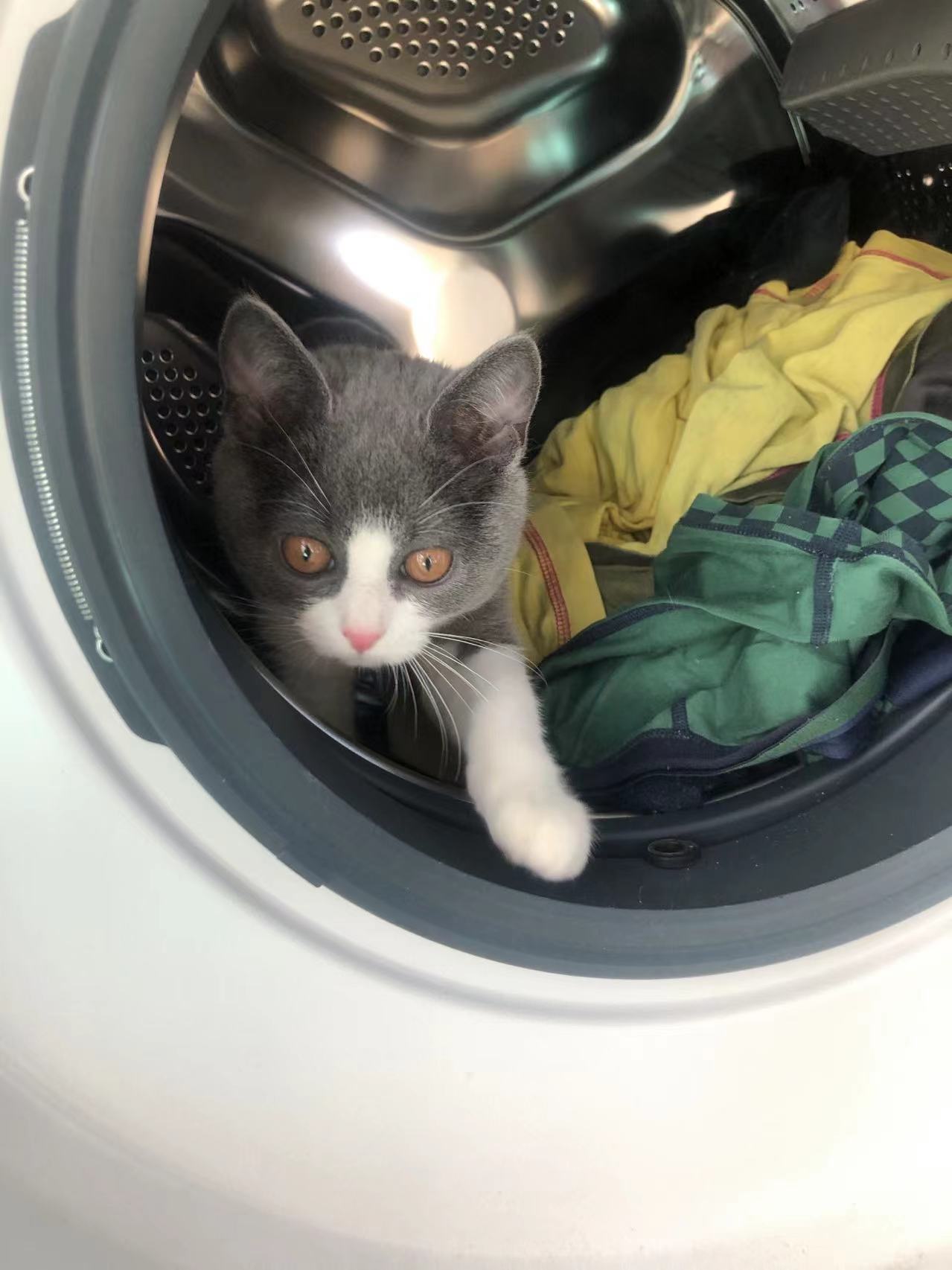
The washing machine is a peculiar modern device that brings together too many paradoxes: liberation and constraint, economy and waste, observation and involvement, sensitivity and numbness… When my father decided to sell the apartment, we unanimously decided to give up the expensive fully automatic drum machine. It belonged more to the apartment itself than to our domestic life. My parents still use the most basic small top-loading pulsator machine at home. It has only two buttons, which switch among a few very vague settings: quick, standard, gentle, rinse, spin. My mother often forgets to take out the spun-dry clothes; my father still uses the “stop-and-soak method”; and I still long for a home that does not necessarily require a fully automatic drum machine, though that remains a distant prospect. At times when I am involuntarily drawn into some social arena, where people expect me to follow a preset programme and spin the traces of my experience out of myself, I cannot help thinking of my mother and me sitting in front of that high-end drum machine. It was an epiphany of an “automated universe,” like a trapped beast fighting to the end. Rilke writes in “The Panther”: “With supple steps that tread with strength, / it circles in a very small ring, / like a dance of force around a centre / where a great will stands stunned.” That is very like us in a “fully automatic” society:
It seems there are only a thousand fully automatic drum machines, and behind a thousand doors, no universe.
(“It seems there are only a thousand bars, and behind a thousand bars, no universe.”)
Translator’s notes. Weilì (威力) is a Chinese washing-machine brand familiar from 1980s and 1990s television ads. Leibniz is also a German butter-biscuit brand, which is the joke behind the Schmidt-Salomon title and the author’s washing-machine “brands”. The Nietzsche and Rilke lines are translated from the Chinese versions the author quotes; the last line rewrites Rilke’s “a thousand bars, and behind the bars, no world”.